*PLEASE NOTE THAT THE VENUE FOR OUR MARCH TALK WILL NOT BE THE SAAO AUDITORIUM, AS USUAL. This shift from the SAAO allows us to test a more central location for some of our members. Additionally, UCT’s venue is provided at no cost, making our events more sustainable. We appreciate your flexibility and cooperation during this transition.*
Venue: UCT Archaeology Teaching Studio (3.10), Third Floor Beattie Building, Upper Campus, Rondebosch
Cost: Free for members | R20 for student non-members | R40 for non-members
RSVP is needed for UCT compliance and access arrangements so please RSVP using this Google Form: https://docs.google.com/forms/d/e/1FAIpQLSc4UFEJbamSLW5nWOeucfGs06g-BhuTPVnYdO6jpFuUZ6ayNA/viewform?usp=header
*The Google Form will close the morning of the talk, 10 March.
Drinks available: Coke, Sherry/Port, Aamrula (R10); Wine (R20)
Please direct all queris to: saarchsoc.western@gmail.com
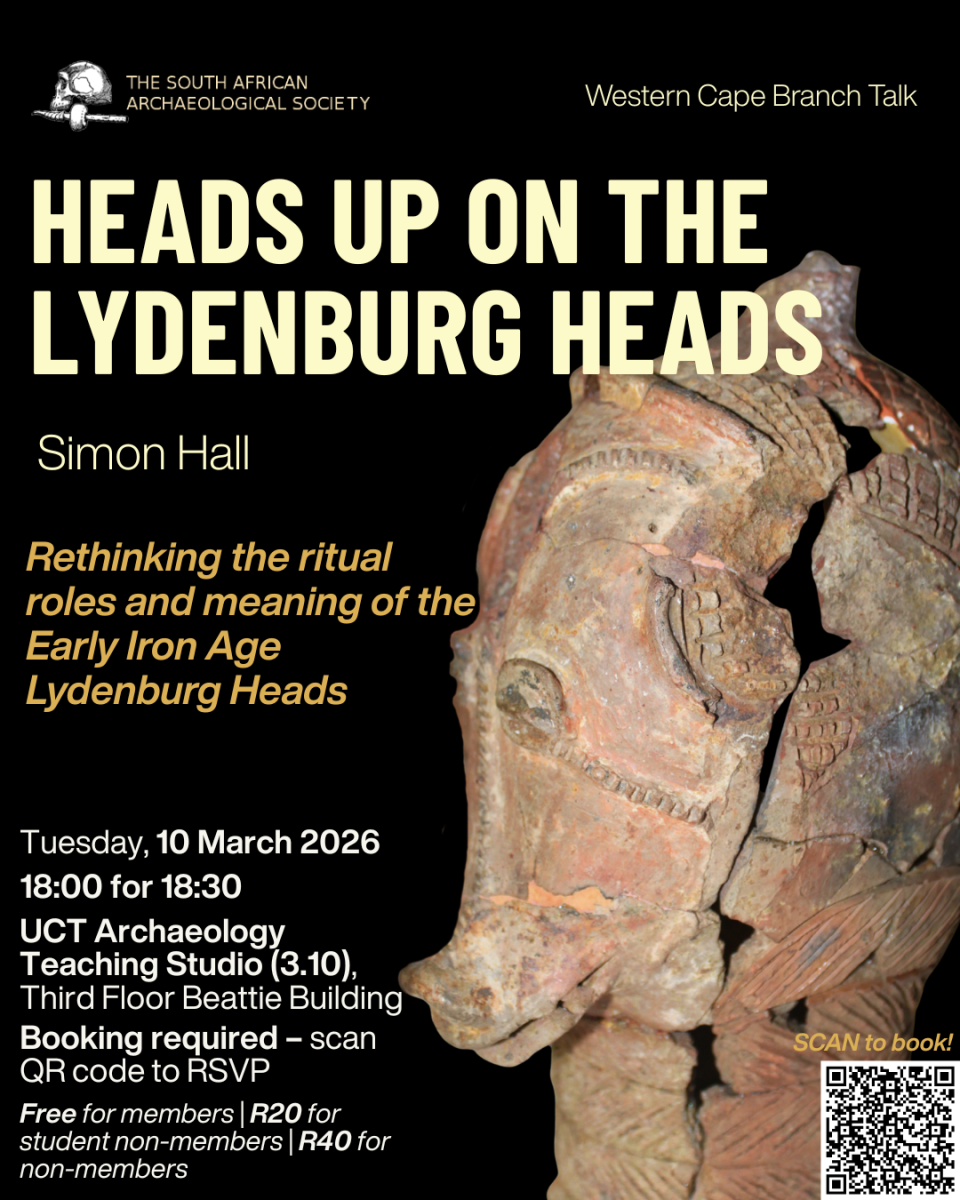
The first description and discussion of the seven terracotta Lydenburg heads by Inskeep and Maggs in 1975 identified them as Early Iron Age ritual objects. Systematic work at the site by Evers established that the seven heads were used as a complete set, deliberately broken after use, and then buried in a pit specifically dug for them. It was not possible to establish the position of this pit within the settlement. Subsequent research has refined the Early Iron Age stylistic affinities of the heads (Whitelaw), and that they were probably used in rites of passage (Loubser). Recent thinking suggests that the animal features of the therianthrope head number 7, refer to the aardvark. This identification provides a key with which to unlock some ideas about the remaining heads through an analysis of their stylistic attributes. This analysis asks, who the other six ‘characters’ in this ensemble are, how did they conceptually interact in ritual performance, what are these concepts, and importantly, who was the target of this ritual performance?
About the Speaker
Simon Hall is an Emeritus Associate Professor in the Department of Archaeology at UCT. His Master’s thesis (University of the Witwatersrand) dealt with Tswana-speaking farmers in Limpopo Province and his doctorate (University of Stellenbosch), examined aspects of the Holocene hunter-gatherer sequence in the Eastern Cape. He has continuing research interests in the Iron Age and Historical Archaeology.
Parking and Access Information
Parking Lot:
https://maps.app.goo.gl/dyvgm9xsdF2AYPTG7
Beattie Building basement entrance:
https://maps.app.goo.gl/7TjAAwkLHTYJg5qa7
On arrival:
- ArchSoc committee members will issue an ArchSoc parking disc.
- Attendees will be escorted into the building in line with UCT access procedures.
- Please follow the dotted blue line along Residence Road from the parking lot to the Beattie Building basement entrance.
The Archaeology Department is located on the third (top) floor. A lift and stairs are available. The talk will take place in Teaching Studio, Room 3.10.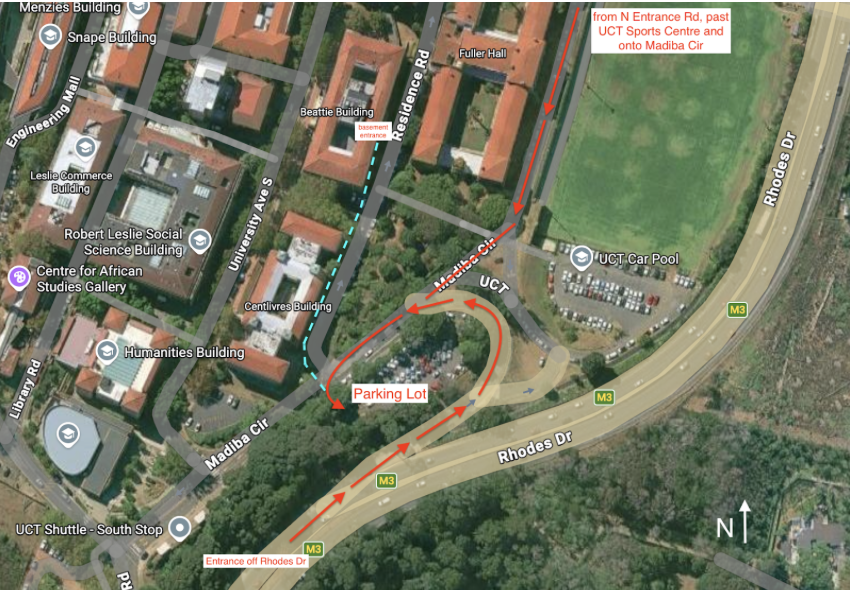
Please note that that doors will close at 18:20 sharp. After this time, committee members will be inside the building and may not be available in the parking area to assist with entry, so we kindly ask that you arrive on time.