3D Heritage Scanning for Virtual Site Visits
By:
Stephen Wessels
Date:
Tue, 13/10/2026 - 18:00
Branch:
Western Cape
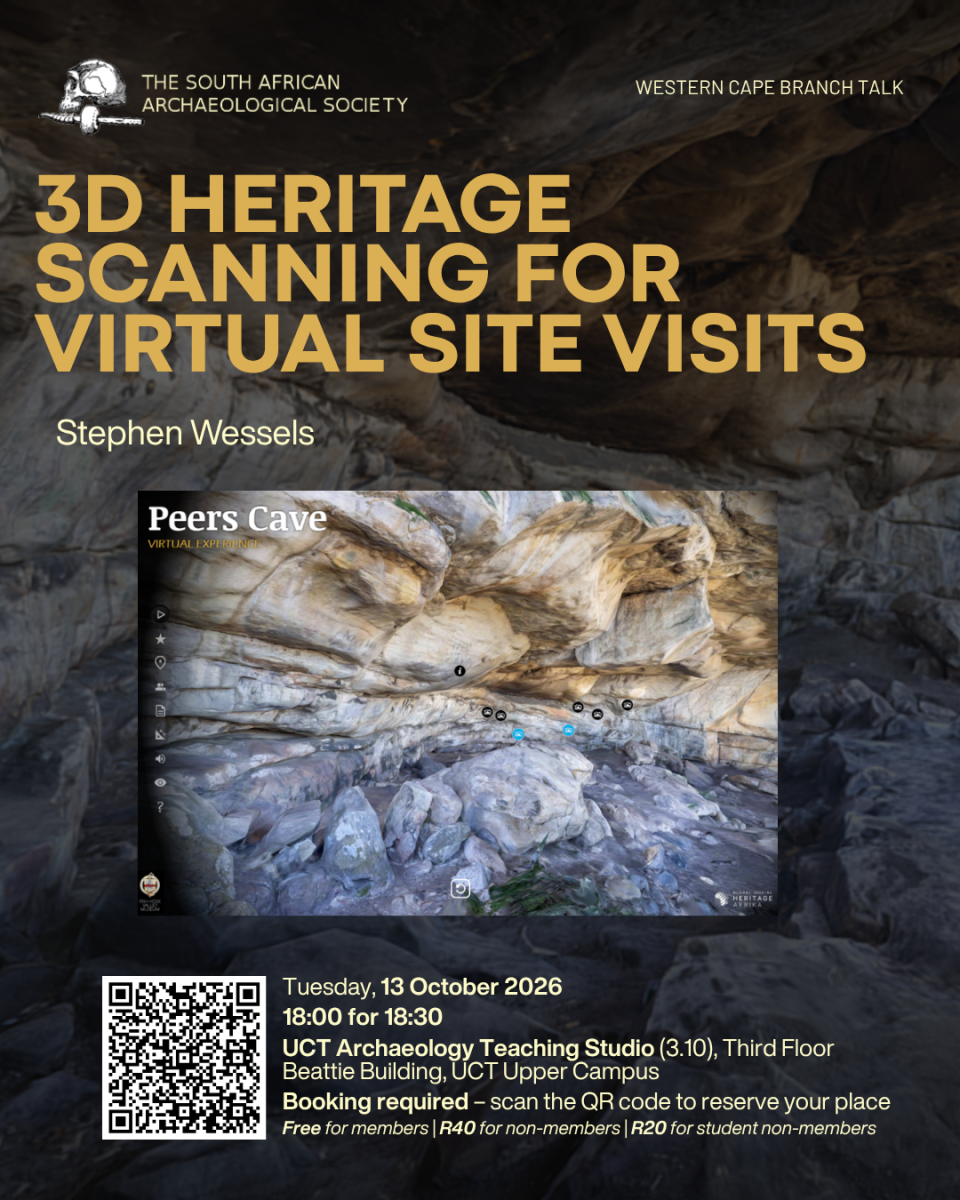
Venue: UCT Archaeology Teaching Studio (Beattie 3.10), UCT Upper Campus
RSVP: Booking required, reserve your spot using the Google Form
*Booking close the morning of the talk, 13 October
Cost: Free for members | R40 for non-members | R20 for student non-members
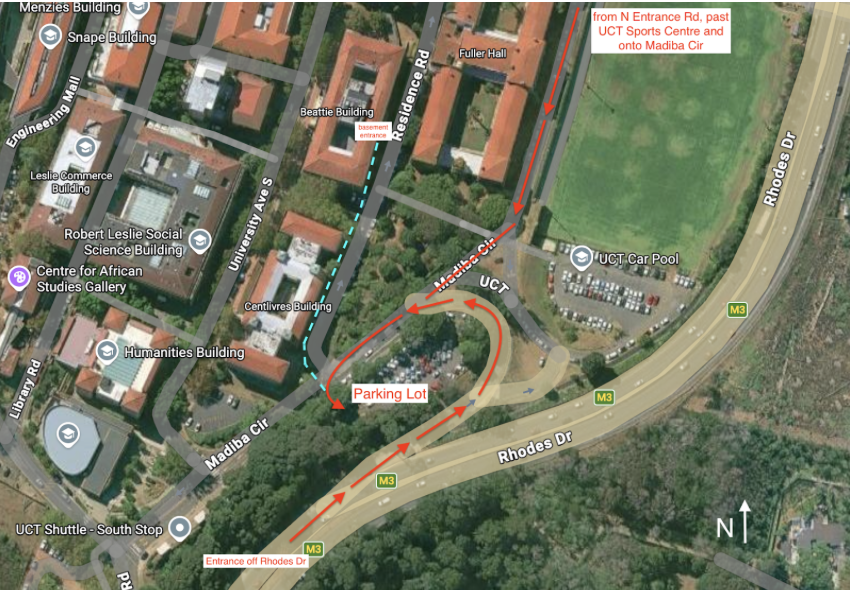
Parking details and directions to the building are provided below. Please print a copy of this event notice and display it on your dashboard on the day of the event, so that Campus Protection Services can identify your vehicle as belonging to an event attendee.
Queries: saarchsoc.western@gmail.com
About the Talk
3D scanning of heritage sites and artefacts has become standard practice, and are used as archival records, for research, and for conservation. My focus is on turning these photo-realistic 3D models into engaging virtual site visits that open these places up to everyone. In this talk, I will look at the different types of virtual tours, spanning simple 360° panoramas and interactive 3D web viewers through to fully immersive VR environments built in game engines. Using practical examples from my recent work, including rock art sites in the Cederberg, Peers Cave on the Cape Peninsula, Diepkloof Rock Shelter, and Ad-Deir in Petra, Jordan, I will share a behind-the-scenes look at how these tours are created and the tools involved. Beyond the technical workflow, we will also explore the philosophical approach behind the build: designing virtual experiences that are educationally rigorous, socially relevant, and capable of conveying the real significance of these landscapes in our digital world.
About the Speaker
Stephen Wessels is a chief scientific officer at Global Digital Heritage Afrika at UCT which does 3D scanning of heritage sites and objects. He is a Geomatician and digital heritage specialist currently pursuing a PhD in Archaeology at the University of Cape Town, where his research investigates the application of 3D models for public virtual access. With nearly twenty years of experience in the field, he has spatially documented over 200 heritage sites across Africa, the Middle East, and Asia. His work focuses on the intersection of high-fidelity 3D documentation, including laser scanning and photogrammetry, and public engagement, aiming to translate technical data into meaningful virtual experiences.
Directions, Parking & Access
Directions, Parking & Access
UCT parking and Beattie building entrance:
Parking Lot:
Beattie building basement entrance:
When walking from the parking lot to the Beattie Building basement entrance, please follow the dotted blue line along Residence Rd.
The Archaeology Department is located on the third floor (top floor). A lift is available, as well as stairs. The talk will take place in the teaching studio, Room 3.10.